INVEST IN POWER, INVEST IN NIGERIA
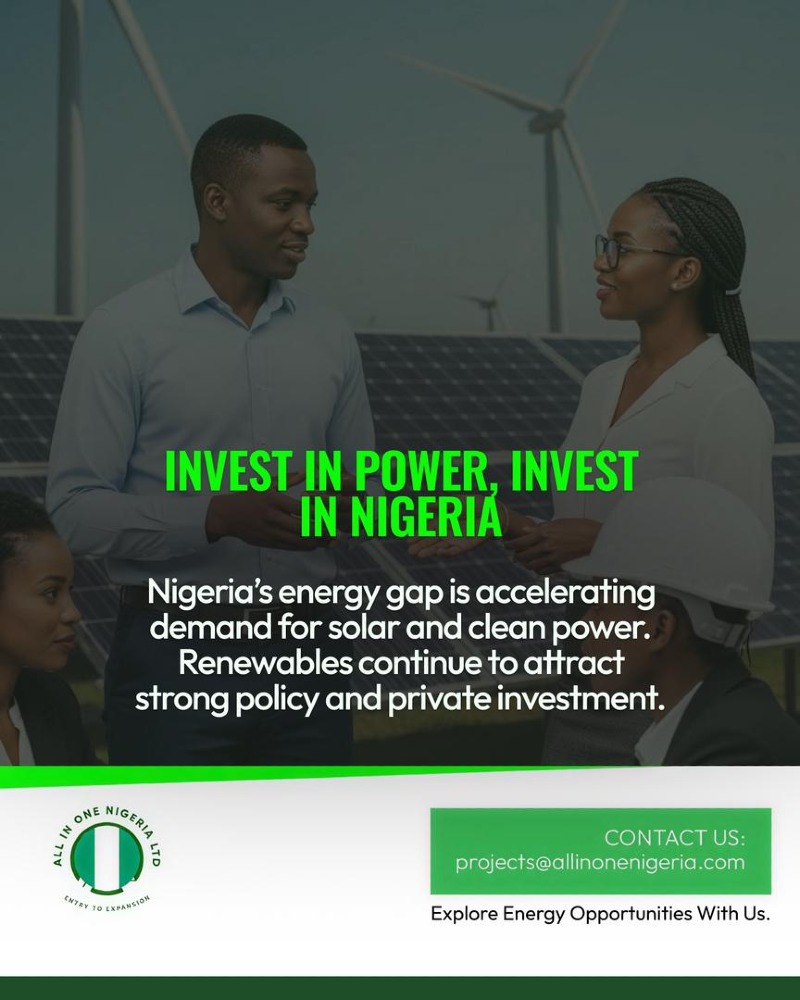
Nigeria’s energy sector is at a pivotal moment. The country faces a significant energy gap, with electricity demand far outpacing supply and millions of Nigerians lacking reliable access to power. This persistent deficit has created a fertile environment for solar and other clean energy solutions to thrive and for investors to capitalise on one of Africa’s most promising markets.
Nigeria’s peak electricity demand is estimated at over 30,000 megawatts (MW), yet the nation’s average supply remains below 5,000 MW, leaving a shortfall of more than 25,000 MW. This gap forces businesses and households to rely on expensive and polluting diesel generators, costing the economy billions annually and limiting productivity and growth. Renewables, especially solar, are uniquely positioned to help close this gap due to Nigeria’s abundant sunlight and declining technology costs. 
Why Nigeria Is Ripe for Renewable Investment
1. Massive Untapped Renewable Potential
Nigeria sits near the equator and enjoys high levels of solar irradiation, averaging more than 4–6 kWh/m² per day, ideal for solar photovoltaic (PV) systems. Analysts estimate that if just 1 % of the country’s land were covered with solar farms, it could generate an estimated 185,000 MW, far beyond current grid capacity. 
Despite this potential, renewables currently make up only a small fraction of Nigeria’s energy mix. Solar contributes less than 1 % of total electricity, and overall renewable generation remains well below what is possible. 
2. Strong Policy Support and Incentives
Recent policy reforms aim to accelerate renewable deployment. Initiatives such as the Solar Power Naija program have already deployed over a million solar home systems, with targets to reach millions more in underserved areas. Fiscal measures, including duty waivers on imported renewable equipment and preferential loans are designed to reduce project costs and attract private capital. 
Energy transition planning is also gaining momentum. Nigeria’s Energy Transition and Investment Plan lays out a roadmap to significantly increase renewable capacity, with ambitious targets for solar photovoltaic installations by 2030 and beyond. 
3. Growing Private Investment and Projects
Significant deals and investment flows are beginning to emerge in Nigeria’s renewable sector. Partnerships aimed at deploying renewable mini-grid systems and utility-scale solar installations are gaining traction, supported by institutional investors, development finance partners, and international capital. 
The country has also taken steps to monetise its energy resources more efficiently. For example, recent permitting under Nigeria’s Gas Flare Commercialisation Programme could attract nearly $2 billion in investment and generate up to 3 GW of power, underscoring broader energy sector reform efforts. 
4. Economic and Social Impact Potential
Investing in Nigeria’s renewable energy sector doesn’t just make economic sense, it can transform lives. Expanded clean energy access can significantly boost rural electrification, create jobs, and support local industries. According to experts, scaling solar projects could unlock billions in carbon market opportunities and position Nigeria as a major player in global clean energy trading. 
Solar and clean power investments can also reduce reliance on diesel and petrol generators, lowering operational costs for businesses and households alike. As solar panel costs continue to fall globally, demand in the Nigerian market is accelerating, with imports and installations increasing year-on-year. 
5. Investment Risks and Opportunities
Challenges remain, including infrastructure limitations, regulatory complexity, and financing constraints. However, Nigeria’s renewable landscape is rapidly evolving, with improving regulatory clarity and growing opportunities for public‑private partnerships. Solutions such as Pay‑As‑You‑Go models and power purchase agreements are already emerging to address affordability and access barriers. 
For investors focused on long‑term growth, Nigeria’s renewable energy sector offers a compelling proposition. With a large, young population, abundant resources, and increasing policy alignment, the country is well‑positioned to transition toward cleaner, more resilient power systems. The renewable energy market in Nigeria, from solar farms and mini‑grids to distributed systems and carbon markets represents a broad landscape of investment opportunities that can deliver both financial returns and sustainable impact.