Understanding the Building Safety Act: What Property Owners and Developers Need to Know
The Building Safety Act is a huge piece of legislation that follows on from the Grenfell Tower tragedy. The act intends to prevent another incident of that nature happening again. The Ministry of Housing, Communities and Local Government (MHCLG) will be taking over from the Health & Safety Executive (HSE) as the body that controls the Building Safety Regulator (BSR) at the end of January 2026. Most firms will have prepared for the act to come into force and be ready for enforcement by the BSR. However, they may not understand the complexities of the legislation and their responsibilities within it, nor the documentation the BSR will be expecting to see.
So, what are the complexities in a nutshell?
Firstly, understand the level of responsibility you hold. The responsibilities are dependent upon who you are in terms of client, designer or contractor (CDM Regulations and terminology need to be considered here as well), and whilst the act applies to all buildings, higher risk buildings that are over 18m in height, or 7+ storeys, trigger additional levels of scrutiny.
There is familiarity in both the Principal Designer and Principal Contractor roles when compared to the CDM regulations. Although there are new responsibilities mandated, there is also now a requirement for an Accountable Person that assumes responsibility for preventing building safety risks and minimising such incidents for high risk buildings.
The Golden Thread of Information
At the heart of the Act is something called the “golden thread” – a digital record of building information that must be maintained throughout the entire lifecycle of a building. This isn’t just a nice-to-have; it’s a legal requirement.
The golden thread must include everything from design documentation and construction records through to ongoing maintenance and safety assessments. It needs to be accurate, accessible, and kept up to date. For many existing buildings, particularly older ones or those that have changed hands multiple times, gathering this information is a significant challenge.
Where Do Land Surveyors Fit In?
This is where the reality hits home for many property owners and developers. You might have the architectural drawings and fire safety assessments sorted, but what about the accurate as-built records? What about verification that what was built actually matches what was approved?
Land surveying sits at the foundation of the golden thread. Without accurate spatial and geometric data, the rest of your documentation is built on shaky ground.
Building Classification – Getting It Right From Day One
One of the first questions you need to answer: does your building actually trigger the higher-risk threshold?
Visual assessment won’t cut it. You need precise measurements to confirm whether you’re over that 18m mark or genuinely 7+ storeys. Getting this wrong means either failing to comply when you should be, or unnecessarily going through additional scrutiny and cost.
A professional building height survey removes the ambiguity. It gives you definitive, documented proof of your building’s classification that will stand up to BSR scrutiny.
What Property Owners Should Be Doing Now
If you own or manage a higher-risk building, here’s what you need to address:
Confirm your building’s classification – Get a professional height survey if there’s any doubt about whether you’re over the 18m threshold.
Audit your existing documentation – What do you actually have? Where are the gaps? Buildings that are old or have changed ownership often have incomplete records.
Set up your digital record-keeping system – The golden thread needs to be digital, secure, accessible, and version-controlled. You can’t just keep filing cabinets of drawings.
Commission surveys to fill critical gaps – For missing structural information, service locations, or as-built records, you’ll need professional surveys. This isn’t optional if the information is critical to building safety.
Understand your duty holder responsibilities – Are you the Accountable Person? The Principal Accountable Person? Make sure you know exactly what’s expected of you.
How NTB Survey Can Help
We work with property owners, developers, and construction teams across Greater Manchester to provide the accurate survey data that underpins Building Safety Act compliance.
Building Height Verification
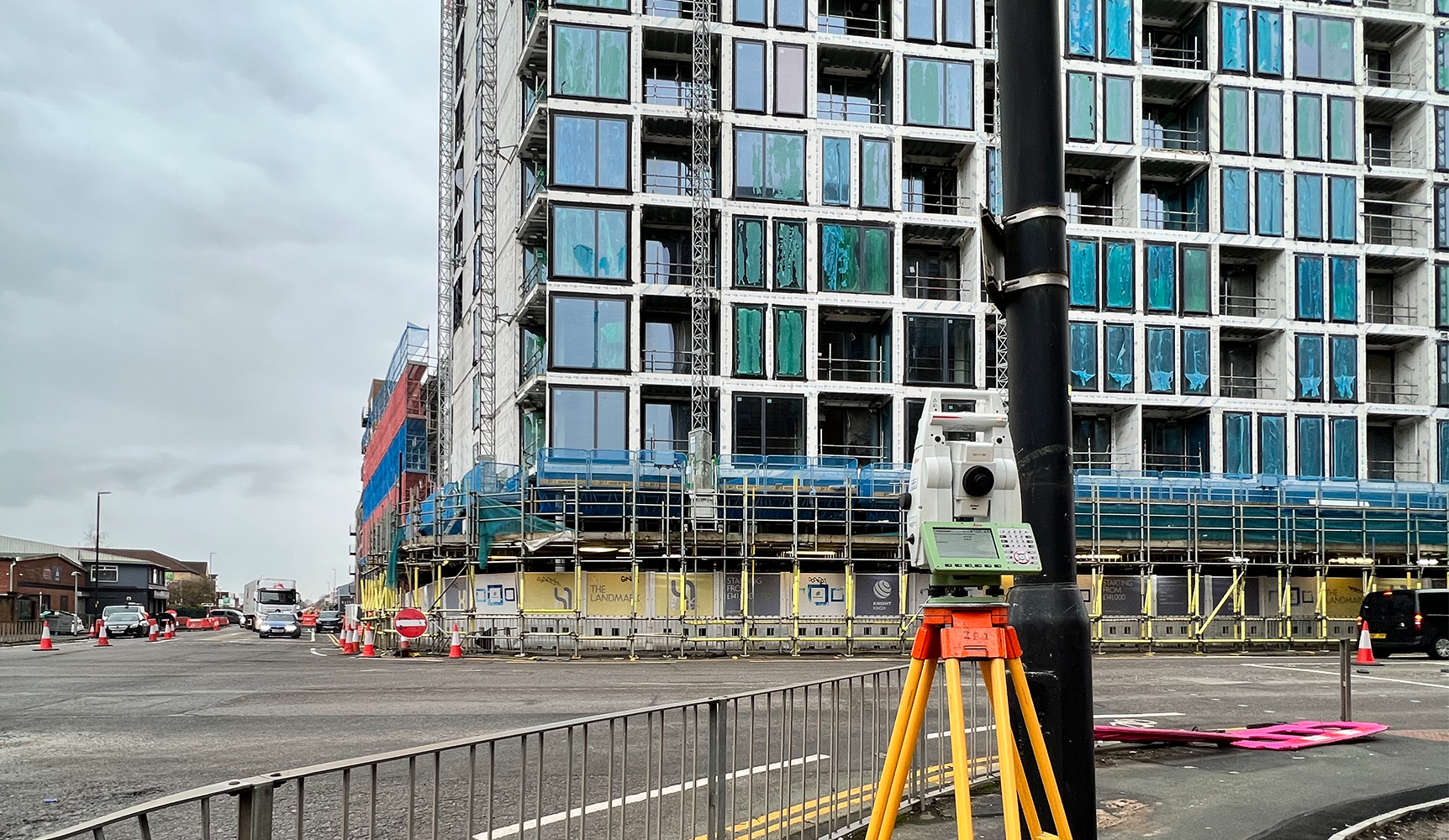
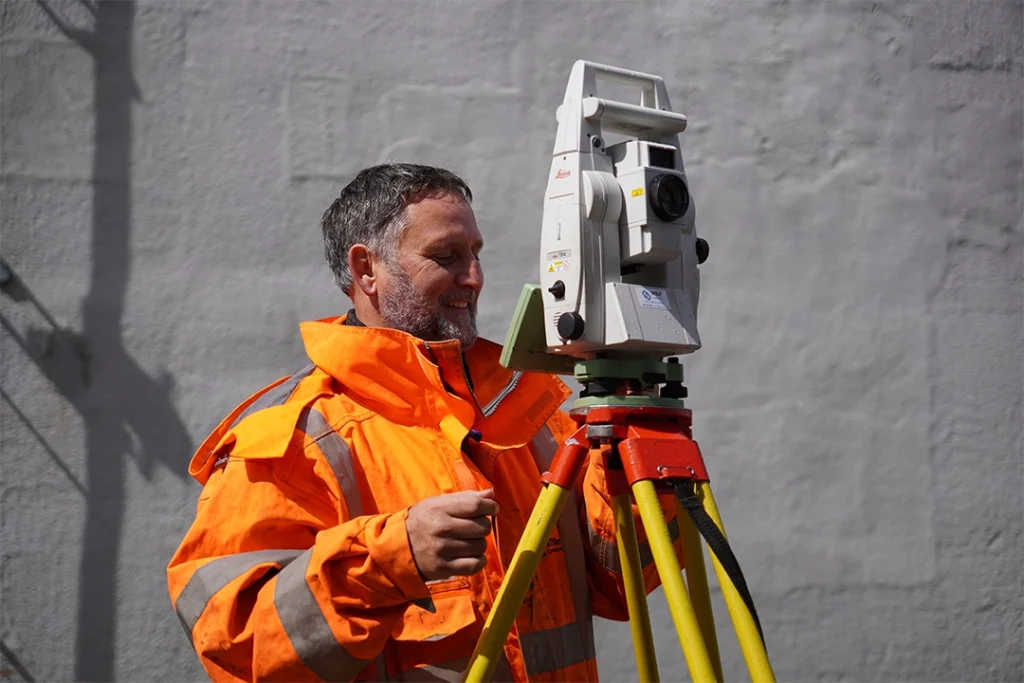
Our 1” Total Station and laser scanner, measure to the highest accuracies in the industry, giving you definitive proof of your building’s height and classification. No guesswork, no ambiguity – just precise, documented measurements that satisfy BSR requirements.
Measured Building Surveys for Existing Properties
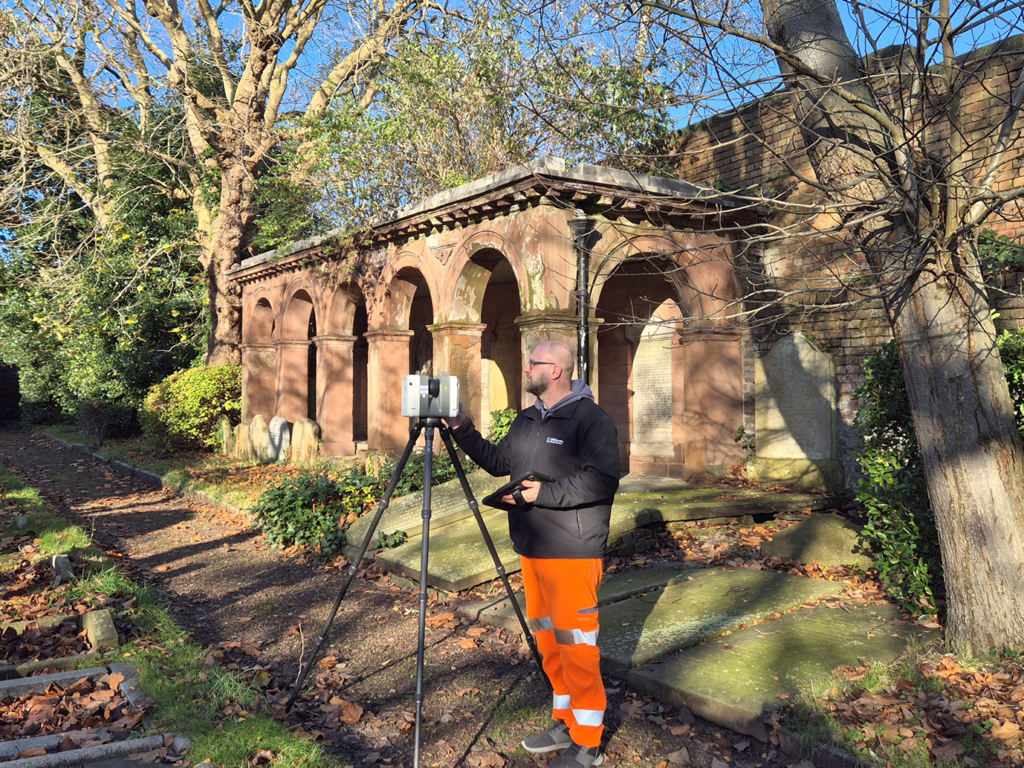
When original drawings are missing or incomplete, we create comprehensive as-existing records through laser scanning and measured surveys. You get detailed floor plans, elevations, sections, and 3D point cloud data that captures every aspect of your building’s current condition.
As-Built Surveys for New Construction
We verify that construction matches approved designs, providing independent documentation for gateway submissions and completion certificates. Our surveys identify discrepancies early, when they’re still manageable.
Golden Thread Foundation
The geometric and spatial data we provide forms the foundation of your digital golden thread. We deliver in formats compatible with BIM and digital record-keeping systems, ensuring your survey data integrates seamlessly with your wider compliance documentation.
The Reality of Compliance
The Building Safety Act isn’t going away. The BSR has enforcement powers and they will be used.
Most firms have ticked the boxes on paper – they’ve registered buildings, appointed duty holders, set up digital systems. But when the BSR starts asking detailed questions about structural configurations, service locations, or whether as-built construction matches approved designs, that’s when the gaps become apparent.
Accurate survey data isn’t just about compliance – it’s about being able to confidently answer those questions with documented evidence. It’s about not discovering critical information gaps when it’s too late and too expensive to address them properly.
Existing Buildings – Filling the Information Gaps
Here’s the problem many building owners face: the BSR expects comprehensive documentation, but your building was constructed 20, 30, maybe 50 years ago. Plans are missing, incomplete, or don’t reflect modifications made over the years.
You’re required to take “reasonable steps” to find this information, and what’s reasonable is proportionate to how important that information is for managing building safety. For critical structural and safety information, reasonable might mean commissioning specialist surveys.
Measured building surveys and laser scanning can create that missing baseline. A comprehensive 3D scan captures every structural element, every service location, every dimension – creating an accurate digital record of what actually exists right now.
As-Built Verification – Proving Compliance
For new builds and major refurbishments going through the gateway approval process, you need to demonstrate that what’s been built matches what was approved.
Saying it does isn’t enough. You need documented evidence.
As-built surveys compare the actual construction against the design drawings with millimetre precision. They catch discrepancies while they can still be addressed, before you’re trying to get your completion certificate and the BSR is asking questions you can’t answer.
This is particularly crucial at Gateway 3, when you’re handing over the golden thread to the building owner or Accountable Person. That handover needs to include verified, accurate information about what’s actually been constructed.
Nick Bamber, February 2026